
Red Light Therapy
Photobiomodulation (Red Light Therapy / RLT) has been around for some time now & has been used by Hollywood actors to keep smooth skin, heal skin, help with hair loss & fight wrinkles, fine lines & aging. Athletes use RLT to speed up muscle recovery & RLT is commonly used by people with all sorts of physical & cognitive ailments. RLT is commonly used within the NHS for muscle tear rehabilitation & Muscularskeletal issues, including speeding up the recovery of sprains & broken bones among other things.
Light is measured in Nanometres. Between 600-800nm is Red Light & is good for skin & surface issues, while 800-1000nm is Near Infrared Light (NIR), which penetrates deeper into the body to work at a cellular level for many different physical & cognitive ailments.
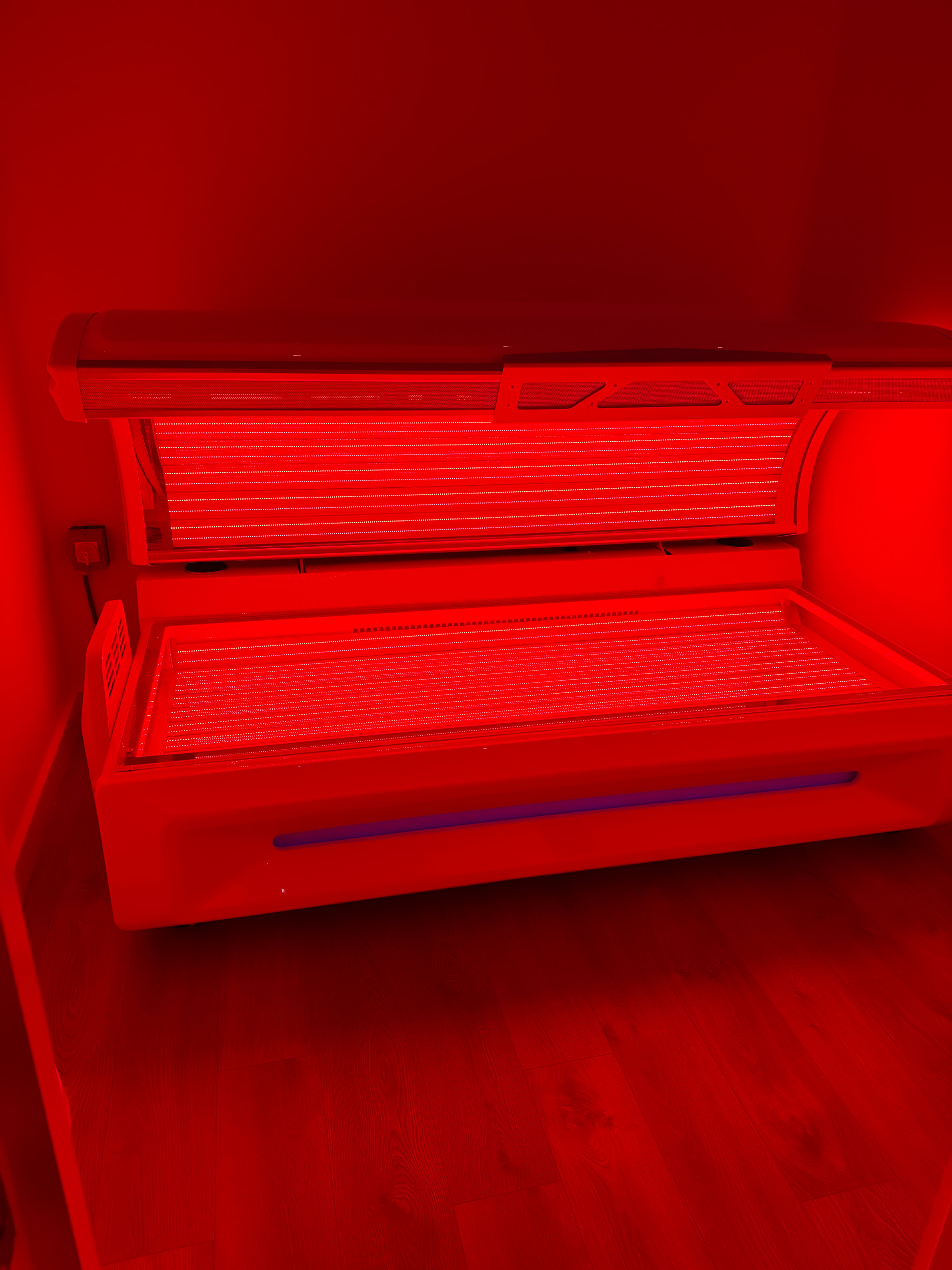
We will be using the state of the art Medi Bed 5, which with 38,600 LED lights as standard, comes with 4 nanometre frequency settings, 633nm, 660nm, 850nm & 940nm. We have however had our brand new bed customized to also include 810nm, which is vital for cognitive issues. Typically, Photobiomodulation beds don’t come with the 810nm setting, due to expense, so it’s a big plus that we’ve gone for this essential upgrade. On the Medi Bed 5, its possible to use any combination of these settings together. With traditional Red Light Therapy Beds, 20 minutes is needed per session, but with this new state of the art bed, less time is needed, so 10 or 12 minute sessions should suffice or 15 minute sessions as a maximum depending on what ailments need to be treated.
At Bed Light & Beyond are committed to researching other Photobiomodulation devices, also aimed at Cognitive issues, skin issues & hair loss issues & will keep you updated with new findings as we move forward.
Please select an item listed blow for futher information and the benefits that Red Light & Infrared Therapy can help with:
600-800 nanometres | Red Light:
800-1000 nanometres | Infrared Light:
Temporomanibular joint dysfunction
Should you have any other ailments that need attention, let us know what they are & we’ll be happy to research those for you to see if RLT can help.
RED LIGHT THERAPY & ANTI AGING
630-670 & 810-850NM.
Red light therapy (RLT) is an effective, non-invasive anti-aging treatmentthat uses low-wavelength red and near-infrared light to stimulate collagen production, reduce fine lines and wrinkles, and improve skin tone and texture.
How Red Light Therapy Works for Anti-Aging
RLT works at a cellular level through a process called photobiomodulation.
Cellular Energy Boost: The light penetrates the skin and is absorbed by the mitochondria (the "powerhouses" of the cells). This increases the production of adenosine triphosphate (ATP), the energy source for cells.
Collagen and Elastin Stimulation: The increased energy allows skin cells, specifically fibroblasts, to work more efficiently, boosting the production of collagen and elastin, the proteins responsible for the skin's structure, strength, and elasticity. As we age, the production of these proteins slows down naturally, leading to wrinkles and sagging skin.
Improved Circulation and Reduced Inflammation: RLT also enhances blood flow, which delivers more oxygen and nutrients to the skin, aiding in repair and regeneration. Its anti-inflammatory properties help to reduce redness and irritation.
How Red Light Therapy Helps with Blemishes
630-670NM.
Red light therapy (RLT) works at a cellular level to improve skin health without using harsh chemicals or UV light. The red light is absorbed by the mitochondria in skin cells, which boosts energy production (ATP) and enhances cellular function.
Specific benefits for blemish-prone skin include:
Reduces Inflammation and Redness: Red light has significant anti-inflammatory properties, which helps calm the swelling and redness associated with active breakouts and conditions like rosacea.
Promotes Healing: By increasing blood circulation and stimulating cell regeneration, RLT accelerates the healing process of existing acne lesions.
Minimizes Scarring and Hyperpigmentation: RLT stimulates collagen and elastin production, which helps repair damaged skin tissue and can fade post-acne marks and improve overall skin tone and texture over time.
Regulates Oil Production: Some studies suggest that red light may help regulate sebum (oil) production in the skin's sebaceous glands, which can prevent future breakouts.
Red Light vs. Blue Light for Blemishes
Red and blue light therapies target different aspects of acne formation and are often most effective when used together.
Blue Light (approx. 415nm wavelength): Primarily targets the P. acnes bacteria, which is a key contributor to acne, by causing a reaction that destroys the bacteria.
Red Light (approx. 630-670nm wavelength): Penetrates deeper into the skin to address inflammation and promote healing, complementing the bacteria-fighting action of blue light.
Many at-home and professional devices now offer both red and blue light modes to provide a combined treatment.
Considerations for Use
Consult a Professional: Before starting at-home red light therapy, especially for moderate to severe acne, it is recommended to consult a dermatologist to ensure it is the right treatment plan for you and to rule out other skin conditions.
Consistency is Key: Results require consistent use over several weeks or months. Most recommendations suggest using a device for 10-20 minutes, 3–5 times per week.
Safety: Red light therapy is generally considered safe with minimal short-term side effects. Ensure any at-home device you purchase is FDA-cleared and follow the instructions carefully, including using provided eye protection.
RED LIGHT THERAPY & COLLAGEN PRODUCTION
660 & 830NM.
Red light therapy (RLT) effectively stimulates the production of collagen by energising the skin cells. This non-invasive treatment is widely used for anti-aging and skin rejuvenation, leading to firmer, smoother, and more elastic skin with consistent use.
How Red Light Therapy Boosts Collagen
Red and near-infrared light work at a cellular level through a process called photobiomodulation (PBM).
Mitochondrial Activation: Specific wavelengths of light (typically red light at around 630-700nm and near-infrared at around 810-850nm) are absorbed by the mitochondria, the "powerhouses" within the skin cells.
Increased ATP Production: This absorption boosts the production of adenosine triphosphate (ATP), the primary energy currency of cells.
Fibroblast Stimulation: With more energy available, cells function more efficiently, and fibroblasts—the cells responsible for producing collagen and elastin—are stimulated to synthesize more of these essential proteins.
Enhanced Circulation and Healing: RLT also improves blood circulation, delivering more oxygen and nutrients to the skin cells, and has anti-inflammatory effects that support the skin's natural repair and regeneration processes.
Benefits for the Skin
By increasing collagen levels, red light therapy helps to:
Reduce the appearance of fine lines and wrinkles.
Improve skin tone, texture, and elasticity.
Firm and plump the skin.
Accelerate the healing of damaged skin and reduce scarring.
Usage and Results
Consistency is Key: Optimal results require consistent, long-term use. Experts often recommend 2-4 sessions per week.
Timeline: Initial improvements like increased hydration and a brighter complexion may be noticeable within 2-4 weeks, while more significant changes to wrinkles and firmness typically become apparent after 8-12 weeks of regular use.
Safety: Red light therapy is a non-invasive, generally safe treatment with minimal to no side effects, and is suitable for most skin types. Those with certain medical conditions or light sensitivity should consult a doctor first.
Combining red light therapy with a good skincare routine (including sun protection, a healthy diet, and products with ingredients like retinol or hyaluronic acid) can further support collagen goals.
RED LIGHT THERAPY & EYESIGHT
630-690 & 810-850NM.
Red light therapy (RLT), specifically deep red (around 670nm) and near-infrared light, shows promise for improving age-related vision decline by boosting retinal cell energy (mitochondria), improving color contrast, and low-light vision in older adults, with studies showing significant, though temporary, gains. While exciting for conditions like dry age-related macular degeneration (AMD) and diabetic eye issues, it's not a cure yet; larger trials are needed, and it's currently used in some clinics for AMD, but lacks widespread FDA approval for eye disease.
How it works
Recharges mitochondria: Deep red/near-infrared light penetrates the retina, getting absorbed by mitochondria (cell powerhouses).
Boosts energy: This recharges the cells' energy system, helping them function better, which declines with age (around 40+).
Key findings
Improved contrast & low light:Studies show significant improvements in color contrast and rod sensitivity (night vision) for those over 40.
AMD potential: Shows promise for early-stage dry AMD, with some patients gaining significant vision improvement, though results can fade and require re-treatment.
Duration: Benefits from initial studies lasted around 6 months before needing repeat treatments.
Current status & considerations
Still experimental: It's a potential treatment, but not yet a standard, FDA-approved treatment for eye diseases, requiring more research.
Safety: Generally considered safe, but avoid shining bright lights directly into eyes; long-term safety data is still limited.
Accessibility: Simple devices for deep red light are being developed, making it potentially accessible.
In summary
RLT is a promising, low-risk therapy for rejuvenating aging retinal cells, showing potential for age-related vision loss, especially in dry AMD, but requires further robust clinical trials to establish it as a standard treatment.
RED LIGHT THERAPY & ECZEMA
630-660NM.
Red light therapy (RLT) may help manage eczema symptoms by reducing inflammation and promoting skin repair, but it is not a primary or standalone cure for the condition. It is generally considered safe and non-invasive, but medical professionals recommend using it as a complementary treatment alongside established therapies like moisturizers and prescription medications, and ideally under the guidance of a dermatologist.
How Red Light Therapy May Help Eczema
Red light therapy uses low-wavelength red and near-infrared (NIR) light to penetrate the skin and stimulate cellular activity, a process called photobiomodulation. For eczema, this mechanism may provide several benefits:
Reduces Inflammation: Eczema flare-ups are primarily caused by inflammation and an overactive immune response. Red light therapy can help by reducing the number of T-cell lymphocytes (immune cells involved in the inflammatory response) and stimulating the production of anti-inflammatory agents, which calms redness, swelling, and itching.
Promotes Skin Healing and Repair: The light energy boosts the function of mitochondria within skin cells, enhancing their metabolism and energy production. This accelerates the healing process, helps repair the damaged skin barrier, and can reduce scarring from scratching.
Increases Blood Flow: RLT improves circulation and the formation of new capillaries, delivering more oxygen and nutrients to skin cells, which further supports healing and hydration.
Non-Invasive and Few Side Effects: Unlike traditional phototherapy which uses UV light and carries risks like sunburn and potential skin cancer with long-term use, red light therapy is UV-free and has a lower risk of adverse side effects.
Important Considerations and Limitations
Not a Standard of Care: The U.S. Food and Drug Administration (FDA) has approved red light devices for general skin health and pain management, but it is not a standard, first-line treatment for eczema itself due to a lack of sufficient large-scale clinical trials.
Consult a Dermatologist: Always consult a board-certified dermatologist before starting RLT to ensure it is appropriate for your specific condition and to determine the best approach.
Professional vs. At-Home Devices: In-office LED light therapy uses more powerful, medically supervised strengths than at-home devices. While convenient, at-home devices may offer only subtle improvements.
May Not Work During Active Flares: Some dermatologists suggest avoiding RLT during an active, severe flare-up when the skin barrier is significantly compromised, as it might cause irritation.
Complementary Treatment: RLT is most effective as part of a holistic eczema management plan that includes moisturizers, barrier repair, and prescribed medications.
For moderate to severe eczema, doctors typically prescribe medical phototherapy using narrowband ultraviolet B (NB-UVB) light, which is administered in a clinic under strict supervision.
RED LIGHT THERAPY & HAIR LOSS
630-670 & 810-850NM.
Red light therapy (RLT), also known as low-level light therapy (LLLT) or photobiomodulation, is a safe, non-invasive, and potentially effective treatment for hair loss, particularly for androgenetic alopecia (pattern baldness). Clinical studies have shown promising results, including increased hair density and thickness.
How It Works
Red light therapy uses specific wavelengths of red or near-infrared light (typically 630–670 nanometers) to penetrate the scalp and stimulate cellular activity in the hair follicles. The primary mechanisms include:
Increased Cellular Energy: The light is absorbed by the mitochondria in the cells, which boosts the production of adenosine triphosphate (ATP), the cells' main energy source. This enhanced energy production improves overall follicle function.
Improved Blood Flow: RLT causes vasodilation (widening of blood vessels), which increases microcirculation in the scalp. This delivers more oxygen and nutrients to the hair follicles, supporting healthy hair growth.
Reduced Inflammation: It has anti-inflammatory properties that can help create a healthier scalp environment, which is beneficial for hair loss conditions where inflammation is a factor, such as alopecia areata.
Prolonged Growth Phase: The therapy is thought to stimulate dormant hair follicles to re-enter the anagen (growth) phase of the hair cycle and prolong its duration, which delays shedding and thinning.
Effectiveness and Usage
Clinical trials suggest RLT can lead to significant improvements, with some studies reporting a 35% to 51% increase in hair growth compared to placebo groups when used consistently over several months.
Consistency is Key: Results require regular and consistent use over several months (typically 3 to 6 months) to see noticeable improvements.
Best Candidates: It is most effective for individuals with early-to-mid stage hair thinning and androgenetic alopecia. It is less likely to regrow hair on completely bald areas where the follicles are permanently damaged.
Combination Therapy: Dermatologists often recommend combining RLT with other proven hair loss treatments like minoxidil or finasteride, as this can enhance results synergistically.
Devices and Cost
Both in-office treatments using medical-grade equipment and at-home devices (such as caps, helmets, and combs) are available. At-home devices are generally less powerful than professional machines but offer convenience and cost-effectiveness.
Safety and Side Effects
Red light therapy is considered very safe with minimal side effects.
Safety: It does not use UV light and does not cause burns or increase the risk of skin cancer.
Mild Side Effects: Minor, temporary side effects can include mild scalp tenderness, itching, or redness. Eye protection is recommended during use.
Consult a Professional: Always consult a doctor or dermatologist before starting treatment to ensure a proper diagnosis of your hair loss and to discuss if RLT is appropriate for you, especially if you have a condition that makes you light-sensitive or are taking related medications.
RED LIGHT THERAPY & IMPROVING SKIN HEALTH
630-660 & 830MN.
Red light therapy (RLT), or photobiomodulation, is a non-invasive treatment that uses low-level wavelengths of red and near-infrared light to stimulate cellular processes, leading to various skin health benefits.
How Red Light Therapy Works
The light is absorbed by the mitochondria in skin cells, which boosts their energy production (ATP). This increased energy allows the cells to function more efficiently, accelerating the body's natural healing and regenerative processes. This action helps to:
Stimulate collagen and elastin production, which improves skin structure, firmness, and elasticity.
Increase blood circulation to the skin, delivering more oxygen and nutrients to the tissue.
Reduce inflammation and redness, making it an effective option for conditions like acne, rosacea, and eczema.
Enhance wound healing and reduce scarring by promoting tissue repair and the formation of new blood vessels.
Benefits for Skin Health
Red light therapy is a versatile treatment promoted for several skin conditions and aesthetic improvements:
Anti-aging: Reduces the appearance of fine lines, wrinkles, and age spots, leading to a smoother, more youthful complexion.
Acne treatment: The anti-inflammatory properties help calm irritated skin, and when combined with blue light therapy, it can also target acne-causing bacteria.
Improved tone and texture: Helps to even out skin tone and reduce dullness or sun damage through increased cellular turnover.
Scar reduction: Accelerates the healing of existing scars from acne, injury, or surgery.
Usage and Safety
RLT is available as both in-office professional treatments and various at-home devices, such as masks, wands, and panels.
Consult a professional: It is recommended to consult with a dermatologist before starting RLT, especially if you have a medical condition or are taking photosensitizing medications.
Consistency is key: Regular sessions are necessary to see results, typically 3-5 times a week for several weeks or months.
Safety: RLT is generally considered safe for most skin types, as it does not use harmful UV light. Eye protection is recommended, and following the manufacturer's guidelines for at-home devices is crucial.
In-office vs. at-home: In-office treatments generally use more powerful devices than at-home versions, potentially yielding faster or more dramatic results. At-home devices are best viewed as a maintenance tool to be used consistently over time as part of a diligent skincare routine.
RED LIGHT THERAPY & PSORIASIS
630-670 & 830-850NM.
Red light therapy (RLT) shows promise as an adjunctive treatment for psoriasis, helping to manage symptoms like inflammation, redness, and scaling. It is generally considered safe and has fewer side effects than traditional UV phototherapy, but it is not a cure and is best used in consultation with a dermatologist.
How Red Light Therapy Works for Psoriasis
Psoriasis is a chronic autoimmune condition characterized by rapid skin cell growth and inflammation. Red light therapy uses low-level red and near-infrared (NIR) light wavelengths (typically 630-700 nm for red light and 830-850 nm for NIR) to penetrate the skin and work at a cellular level.
Reduces Inflammation RLT helps modulate the immune response and decrease pro-inflammatory cytokines, which reduces the pain and swelling associated with psoriasis plaques.
Slows Cell Production It can help normalize the rapid turnover of skin cells that causes thick, scaly plaques.
Promotes Healing By increasing energy production (ATP) within cells, RLT boosts blood circulation and stimulates collagen production, which helps the skin barrier repair itself and accelerates the healing of lesions.
Efficacy and Use
Studies have indicated that RLT can be effective, with some research finding significant improvement in symptoms (60% to 100% clearance of plaques) in participants after several weeks of consistent use.
Adjunctive Treatment RLT is typically used alongside other treatments, such as topical creams or oral medications, as part of a comprehensive management plan.
Professional vs. At-HomeTreatment is available in dermatology clinics or medical spas, but at-home devices are also available. Clinical-grade devices are often more powerful and effective.
Consistency is Key Regular, consistent sessions are necessary to see and maintain results.
Considerations and Risks
Red light therapy is non-invasive and generally considered safe, with minimal side effects such as temporary redness or dryness. Unlike traditional phototherapy (UVB or PUVA), RLT does not use UV rays, so it does not increase the risk of skin cancer or premature skin aging.
Consult a Doctor It is crucial to consult a healthcare provider or dermatologist before starting RLT to determine if it is a good option for your specific condition and to rule out any contraindications.
Eye Protection Eye protection should always be used during RLT sessions.
This website may use cookies.
Please visit our Privacy Policy for details.